
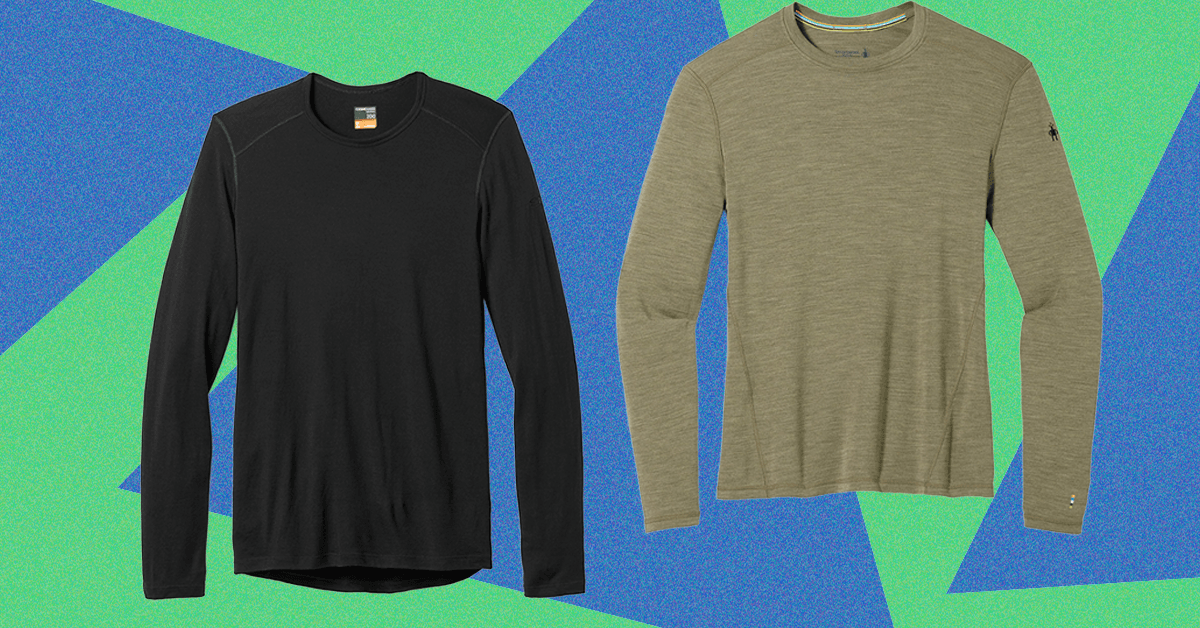
The right base layer for you is going to be the one that keeps you dry by moving your body heat and sweat away from you. Which base layer is best at this depends on what you’re doing. If you’re actively moving (hiking, climbing, ski touring, etc) look for something thinner that wicks moisture better, like our top pick the Ibex Woolies Pro Tech Crew. When you stop moving and you need more warmth, throw on an extra mid layer or puffer jacket.
If you’re going to been spending less time on the move, or are heading into more extreme temps, sweat is often less of an issue and the base layer is less a way to wick sweat and more of an added insulation layer. This is the scenario in which to go with a heavy weight garment like the Smartwool Classic Merino.
What if you do both? Well, then you might need two different base layers. No matter how much I want to have just one thing that does it all, the fact is nothing is that versatility. Warmer base layers like the Smartwool don’t breath well enough to use on the less chilly mornings of a summer backpacking trip, where you need something, but not as much as the Smartwool. At the same time the very lightweight merino layers, while great for high-intensity activities, aren’t as warm when you’re not moving.
If you’re like me, and don’t have an unlimited budget, you’ll also have to factor in price. This is why I recently added the Carhartt’s because while I do own the Woolies and the Smartwool Classic tops, if I wear those all the time I’ll be replacing them before I know it. The Carhartt synthetic layers stand up better to wear than merino (even, often, merino blends), and cost less. The combination of the three tops is $260, which isn’t too bad for a year-round system that can handle everything from summer backpacking to winter snowshoe trips to working on the truck in an unfortunately cold garage.