
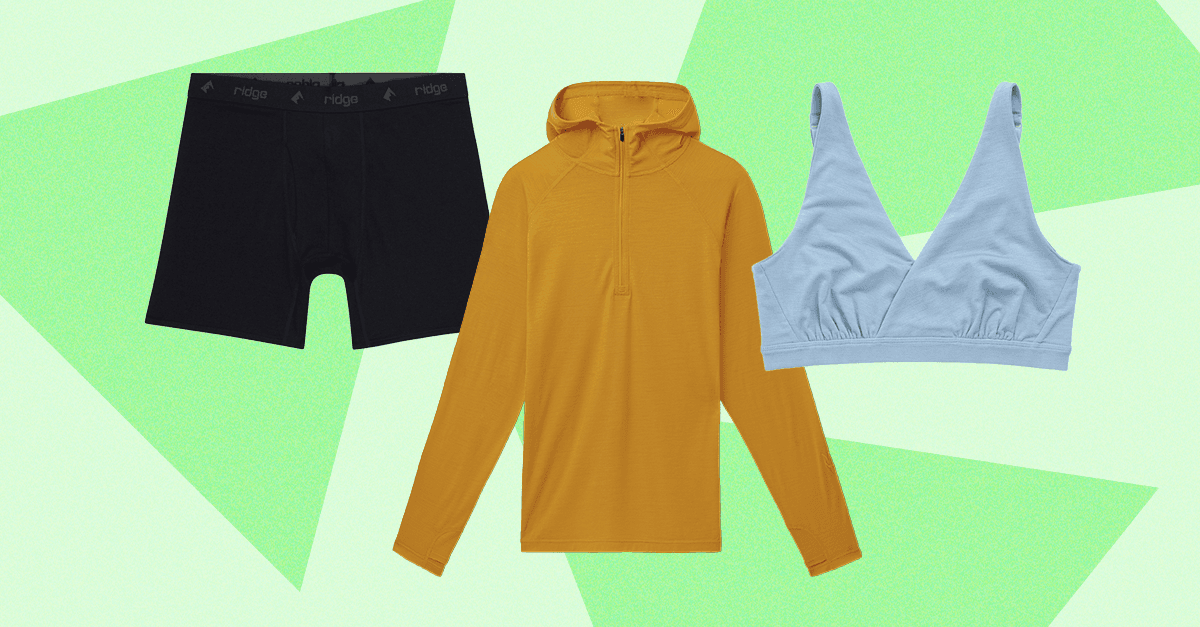
Merino wool is a super fiber that’s both natural and highly technical. The best merino wool clothing somehow manages to be comfortable in 95-degree heat, while merino base layers keep you warm well below freezing. Unlike synthetic fibers derived from petroleum, merino wool is renewable.
Merino wool’s versatility means there’s a bewildering array of blends and options. Here are our favorite merino wool products that we’ve tested by wearing and washing (usually in cold water and hung to dry, although we do machine-dry them just to see what happens) over the course of months and, in some cases, even years. Be sure to also check out our apparel guides, including Best Merino Wool T-Shirts, Best Base Layers, Best Puffer Jackets, Best Hoodies, and Best Hiking Boots.
Updated August 2026: I’ve added a new section for merino-blend pants and additional everyday wool clothing, and swapped out a few sold-out items for this autumn’s new arrivals. I’ve also updated prices and links throughout.
Table of Contents
Why Is Merino Wool So Great?
Merino wool is great because you’re borrowing a sheep’s ability to keep itself warm or cool based on the temperature, a process often referred to as thermoregulation. If you’ve only ever worn the sort of itchy wool sweaters your proverbial grandmother supposedly made, you might wonder what all the fuss is. The answer is that Merino sheep have thinner, softer wool, which has evolved to keep them comfortable across a wide range of temperatures and is comfortable to wear next to your skin. Wool is sustainable, too. One sheep can produce 4 to 5 pounds of wool per year. But be aware of merino greenwashing, as the process from sourcing the wool to the end product may still involve chemicals, polluted waters, synthetic fabrics, and other things that increase the carbon footprint. Research a company’s methods and claims, as cheaper merino wool may not be as sustainable as marketed.
Merino wool comes in different weights, which you will often see listed as “200 GSM” or something similar. GSM refers to grams per square meter, sometimes listed as g/m².) What’s important is the scale and where your garment falls on it. At the low end, you have T-shirts and underwear, which are typically 150 GSM, though we have seen some as low as 120 GSM. Generally, anything below 200 GSM will be a good base layer or T-shirt. From 200 to 300 GSM are your mid-layers, and anything above 300 is a heavier garment.
If you’re more familiar with synthetic ratings like those often used on fleece, know that, from my experience, about 120 to 160 GSM wool corresponds to 100-weight fleece, 160 to 200 GSM wool roughly matches 200-weight fleece, and 200-plus GSM wool is like 300-weight fleece. In every instance, wool is warmer because it’s better at trapping heat, especially in the wind. (That said, there are reasons to go with fleece at times, like how incredibly lightweight it can be.)
Nuyarn is a merino wool/synthetic hybrid weave, in which merino wool is wrapped around a nylon core for warmth, lightness, and extra durability. The idea is to get the temperature-regulation benefits of merino while adding some of nylon’s longevity. In my experience, Nuyarn mostly works. It’s our top pick for base layers, though I find it less necessary in more casual garments, where I prefer 100 percent wool.
How to Care for Merino Wool
Most merino products have care instructions that say to wash them in cold water and lay flat to dry. The latter is important, as hanging wool to dry will stretch it out (because of the water weight). While most merino labels say the garment can be machine washed, my experience has been that hand-washing will extend its life. This is particularly true of very lightweight (150 GSM) merino base layers and T-shirts. The exception is Minus33’s Microweight Raglan short-sleeve T-shirt, which is machine-washable and dryer-friendly. Having done both to mine for over a year, I can vouch that it holds up.
I’ve never had a problem storing merino in my closet between wears, but for long-term storage, I recommend you take precautions against moths, which are notorious for eating holes in wool. I have lost merino garments to moths.
If you don’t want the fabric to smell like mothballs, there are better solutions. I make sure to wash and thoroughly dry whatever I am storing, then I seal it in a compression bag. Another option is to put your merino garment in a cotton bag or wrap it in cotton, then put it in a plastic bin. It’s very important to make sure that the garment is completely dry before using any of these storage methods; otherwise, your wool will smell musty and moldy. Other options include storing your garment in a cedar chest, a good natural deterrent for moths, or using moth traps or lavender sachets, which will repel moths.
100 Percent Merino vs. Blends
Should you buy 100 percent merino or go for a blend? It depends on the garment in question, the use case, and your preferences. Probably the best way to find out is to try several and see what you like. One advantage of blends is that they’re stretchy, which makes them better for active pursuits like hiking, rock climbing, and the like. I like 100 percent merino for heavier mid-layers like hoodies or jackets, but I prefer blends for lighter layers. My experience has been that the closer I get to my skin, the more blend I want, with Nuyarn being my top pick for base layers.
There are also some alpaca blends out there that are wonderfully soft (I love everything I’ve tried from Paka and Arms of Andes). Alpaca is not merino, but both share similar qualities. If you’re one of the rare people who do find merino itchy, you might be allergic to lanolin, which is the skin oil produced by sheep. Alpacas don’t make lanolin, and the fibers are thinner and finer than merino. That makes alpaca warmer and softer, but it’s also more expensive.
Merino vs. Synthetic Fibers
Synthetic fabrics include polyester, nylon, polypropylene, rayon, or blends of these and other fabrics—everything but cotton, wool, and linen. In most cases, they are less expensive than natural fibers.
Synthetics generally win for wicking away sweat, which means they tend to feel drier. They also usually dry faster, so for things like socks and underwear, even most “merino” options are often more than 50 percent synthetic. Synthetics are just better at handling moisture. How much this matters depends on a host of personal factors. For example, I feel weird and almost clammy in anything synthetic, so I don’t really care how much moisture it wicks away.
The downside is that synthetics retain odor. Some chemical treatments can help, but I’ve never tried anything synthetic that is as odor-resistant as merino wool.
Another difference is breathability. Synthetics are passable in this department, but it’s where merino really excels. If you’re hot and are hiking up an exposed slope toward an open pass and then dropping down into the cool of a forest, merino is your friend, because the breathability means less sweat to cool you when you get out of the sun. Again, how much this matters depends on your body.
The final factor worth thinking about is durability. In some cases, synthetics will last longer than pure merino, particularly in scenarios where abrasion is a major source of wear. To my mind, this is another reason to choose a merino blend rather than going all the way to synthetics, but it’s something to consider if you do a lot of off-trail hiking or rock climbing—any activity where your clothes are going to take a beating.
Base Layers
To really see how remarkable merino wool is, start at the bottom, with the clothes next to your skin. Merino really shines as a base layer. It’s warmer for the weight, wicks moisture well, and unlike synthetic fabrics, merino stays stink-free for days of wear. Be sure to read our layering guide for more on how to put it all together and stay comfortable in any weather. We also have a separate guide to the best base layers if you want to know all your options, but here are our top merino picks from that guide.
Best Lightweight Base Layer
-Offwhite-Background-SOURCE-Ibex.jpg)
Ibex
Woolies Pro Tech Crew
The Ibex Woolies Pro Tech Crew is the best lightweight merino base layer we’ve tested. If you want a hard-wearing shirt, this is it. Woolies are Nuyarn (see above), which is 85 percent merino wool and 15 percent nylon—the merino wool is wrapped around a nylon core, which increases the warmth while being lighter (5 oz for the men’s large) and more durable. This is my top pick for all things technical. It’s what I bring hiking and backpacking, and it’s a great pick for running, climbing, and other high-aerobic activities when it’s cold. I also love the Woolies Pro Tech Bottoms, which I bring backpacking in all but the warmest weather.
Aside from comfort and warmth, part of the reason we recommend Woolies is that they last. Ibex is what passes for a heritage company in this space; the company was founded in 1997 and has been cranking out merino garments for a long time. Properly cared for, Woolies will keep you comfortably warm for years to come.
Best Heavyweight Base Layer

SmartWool
Merino Classic Long-Sleeve
When I want something a bit warmer than the lightweight Woolies above, I reach for Smartwool’s Classic long-sleeve base layer. These may be the most popular merino shirts around, and for good reason: They’re very comfortable and on the looser side, feature heavy-duty seams that don’t rub, and sit off the shoulder for more comfort when wearing a backpack. At 87 percent merino wool (blended with nylon), these are also very durable while remaining lightweight (10.3 oz for a men’s large). This Smartwool shirt, along with the matching pants, is great for chilly winter days.
-SOURCE-Unbound.jpg)
Courtesy of Unbound Merino
Unbound Merino
Long-Sleeve Merino Crew
The picks above all have what my wife calls “that sporty look,” which the industry refers to as “technical.” This 100 percent merino shirt from Unbound is the opposite: it just looks like a regular long-sleeve shirt. It’s incredibly soft, and while it does pill a bit if you run it through the dryer (don’t), it’s proven itself plenty durable—I’ve been wearing it constantly for over a year now, and it still looks like it did when I got it. It’s the long-sleeve base-layer twin to our favorite T-shirt (see below). It’s on the thin side for a base layer, which makes it perfect for cool-weather mornings in the shoulder seasons. It’s versatile too; it can be used as a base layer, but it also works as a T-shirt when it’s not too chilly. Fit runs true to size, and if the one you want is sold out, be patient; Unbound frequently updates its stock.
Here are a few more to consider, but really, go read our base layer guide.