
NASA will trade the Artemis mission that was expected to land astronauts on the moon for a new plan intended to increase launch frequency of the agency’s mega rocket.
At a news briefing on Friday, NASA administrator Jared Isaacman described a vast overhaul to the moon-to-Mars program. The changes scrap the Artemis III lunar landing and instead make it a flight in low-Earth orbit for a crew to practice meeting up with either the SpaceX or Blue Origin-built lunar landers — or, perhaps, both.
Those efforts also will impact the U.S. space agency’s timeline for the future Artemis missions, moving up the revised Artemis III flight to the middle of 2027, which could make way for Artemis IV and Artemis V at the beginning and end of 2028. Under the new direction, Artemis IV would be the first mission to put astronaut boots on the lunar surface.
The sweeping revisions to the agency’s program came during an update on repairs to the Space Launch System rocket, which will launch Artemis II, a 10-day lunar flyby mission with a crew, as early as April.
“There has to be a better way in line with our history,” Isaacman said. “We did not just jump right to Apollo 11. We did it through Mercury, Gemini, and lots of Apollo missions, with a launch cadence every three months. We shouldn’t be comfortable with the current cadence. We should be getting back to basics and doing what we know works.”
NASA leaders said the shakeup is meant to address a larger underlying problem: the U.S. agency is flying its most powerful rocket too infrequently and repeating some of the same technical issues from one mission to the next.
Isaacman pointed to hydrogen leaks on Artemis I and helium flow problems on Artemis II as signs that a three‑year gap between launches is not sustainable. When teams only fly every few years, he said, they lose “muscle memory” — the routine, hands-on experience required to handle a complex rocket safely and efficiently.
This Tweet is currently unavailable. It might be loading or has been removed.
To fix that, NASA is redefining the Artemis campaign as a step‑by‑step test program. The agency now aims to launch roughly once every 10 months, standardize its rocket configuration, and rebuild in‑house expertise that has withered over time.
Increasing the Artemis launch cadence
A major change is the decision to treat Artemis III as a practice mission in Earth orbit rather than a landing attempt. That mission will let astronauts and engineers test how the Orion spaceship and the landers find each other, fly together, and possibly dock. It will also allow crews to start checking life‑support systems and other hardware inside the landers before sending them all the way to the lunar surface. Officials said they may even try limited tests of the new moonwalking suits in weightlessness, if schedules allow.
Mashable Light Speed
NASA leaders argued that it makes more sense to uncover problems and practice operations close to home, in Earth orbit, rather than discovering them for the first time while attempting a landing on the moon. If the faster launch tempo holds, Artemis IV and Artemis V together could give NASA two opportunities in 2028. Officials stressed that the timeline still depends on hardware readiness and safety reviews.
Work toward Gateway, a small space station that would orbit the moon and serve as a staging point for future missions, is not going away, officials said. But they made clear the agency’s priority is getting Artemis flights off the ground more often before building out that lunar outpost.
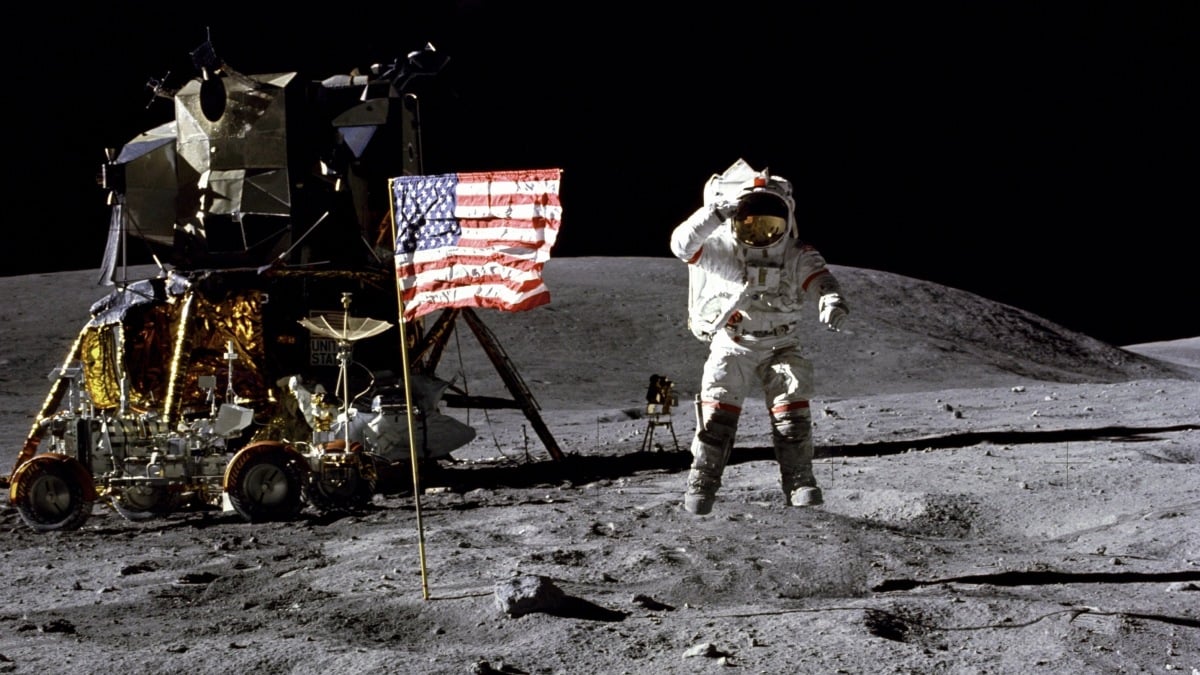
Not far from their minds is the reality that China is also attempting to land its own crew on the moon before 2030 and may be able to get there before the United States. NASA hasn’t sent humans to the lunar surface since Apollo 17 in 1972. And though no other nation has followed in the giant leap for humankind, that won’t always be true.

NASA leaders announced an overhaul to the Artemis program’s timeline, trying to simplify the missions and created a stepped approach from one launch to the next.
Credit: NASA infographic
“[In] the 1960s [it] turned out, in hindsight, we had a near-endless schedule margin there,” Isaacman said. “That is certainly not the case today. I’d say this is very, very close from a timeline perspective.”
Artemis 2 works toward April launch
The revised campaign comes as engineers work through immediate issues on Artemis II, the first crewed flight of the program. After a successful “wet dress rehearsal” — a full countdown test that loads the rocket with super‑cold fuel — teams discovered that helium was not flowing correctly to the engines in the rocket’s upper stage.
Helium is used to pressurize tanks and help push fuel into the engines. Without proper helium flow, the rocket cannot safely fly. Because the upper stage is hard to reach at the launchpad, NASA rolled the stacked rocket back into the Vehicle Assembly Building, the sky-scraping hangar where it was originally put together.
While the rocket is inside, technicians will remove and inspect suspected helium system components, update any faulty hardware, and perform other work. That includes replacing batteries in the flight termination system — the emergency system that can destroy the rocket if it strays off course — swapping out a seal on the line that feeds liquid oxygen into the rocket, refreshing items inside Orion, and giving the closeout crew more practice sealing the capsule.
NASA wants to streamline that work to preserve a chance to launch Artemis II on April 1, April 3 through 6, or April 30. They have not provided potential launch dates beyond April, despite many requests from reporters to do so.

Technicians are trying to diagnose a helium flow problem in the upper stage of the moon rocket ahead of Artemis II, which could launch as early as April.
Credit: NASA
Back to the Apollo-era approach
Beyond the near-term, Isaacman said NASA will standardize the current moon rocket configuration instead of evolving the design after only a few flights, as originally planned. The goal is to avoid turning each booster into a bespoke project and instead fly a simpler, repeatable version that industry can achieve quicker.
Isaacman also highlighted a push to rebuild NASA’s workforce, shifting some key roles from contractors — who today make up about 75 percent of the agency’s technical labor — back to in-house expertise. NASA leaders say that will give them more control over launch preparations, as it did in the Apollo and space shuttle eras.
The White House, Congress, and major contractors support the new approach, he said. The bigger question is whether the American public will get on board. Many people are unaware that NASA is just weeks away from launching astronauts into deep space for the first time in over a half-century.
“It’s a different environment than the 1960s. There’s more than three channels on a TV, so capturing people’s attention at times can be challenging,” Isaacman said. “I have no doubt when Artemis II takes flight, the world will take notice to that.”