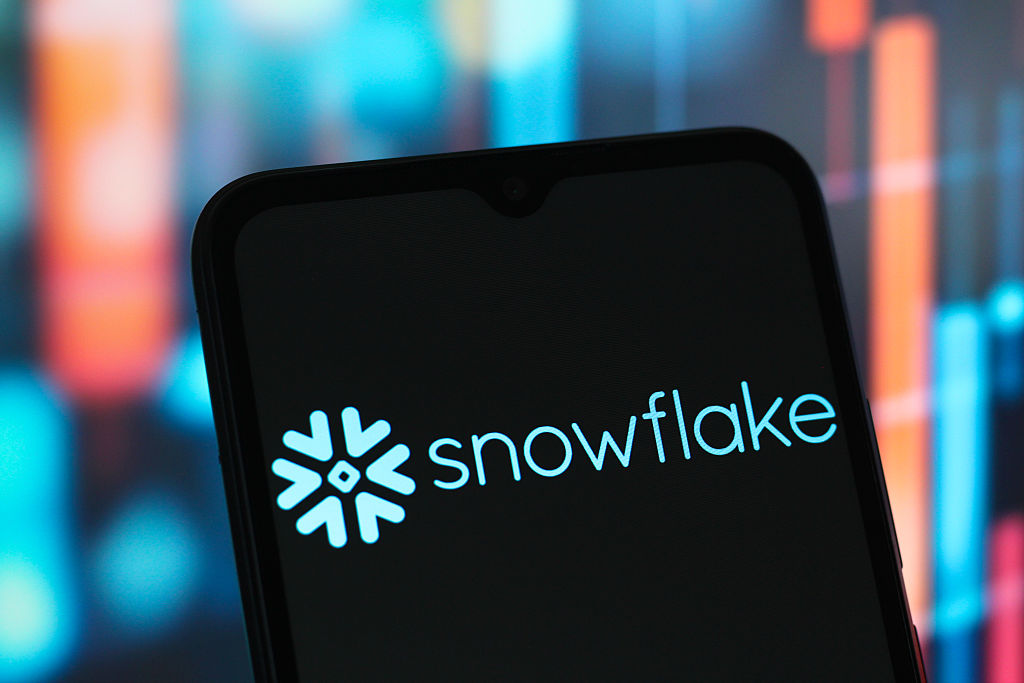
Cloud data company Snowflake has entered into a $200 million multi-year AI deal with OpenAI on Monday, the latest signal that enterprise AI competition continues to heat up.
Under the deal, Snowflake’s 12,600 customers will have access to OpenAI models across all three major cloud providers. Snowflake employees access to OpenAI’s ChatGPT Enterprise as well. The two companies are also partnering to build new AI agents and other AI products.
“By bringing OpenAI models to enterprise data, Snowflake enables organizations to build and deploy AI on top of their most valuable asset using the secure, governed platform they already trust,” Snowflake CEO Sridhar Ramaswamy said in a press release. “Customers can now harness all their enterprise knowledge in Snowflake together with the world-class intelligence of OpenAI models, enabling them to build AI agents that are powerful, responsible, and trustworthy. Together, we’re setting a new standard for AI innovation, helping businesses transform with confidence, while maintaining strong security and compliance standards.”
OpenAI declined to share information on the deal beyond the press release.
If this deal feels familiar, it should. Snowflake announced a $200 million enterprise deal with AI research lab Anthropic at the beginning of December. At the time, Ramaswamy was quoted making very similar comments about how the partnership with Anthropic would give its customers access to powerful AI models on top of their existing data.
“Our partnership with OpenAI is a multi-year commercial commitment focused on reliability, performance, and real customer usage. At the same time, we remain intentionally model-agnostic. Enterprises need choice, and we do not believe in locking customers into a single provider,” Baris Gultekin, vice president of AI at Snowflake told TechCrunch over email. “OpenAI is an important partner, and it is one of several frontier model providers available on Snowflake today, alongside Anthropic, Google, Meta, and others.
Snowflake isn’t the only enterprise signing sizable deals with multiple AI companies either.
Techcrunch event
Boston, MA
|
June 23, 2026
In January, workflow automation platform ServiceNow announced multi-year deals with both OpenAI and Anthropic for very similar reasons as Snowflake. ServiceNow president, COO and CPO Amit Zavery told TechCrunch at the time that working with both AI labs was deliberate because they wanted to give their customers and employees the ability to choose which model they wanted based on the task at hand.
It’s hard to pinpoint which AI companies are seeing the most enterprise adoption success thus far.
A Menlo Ventures survey from late 2025 shows its portfolio company Anthropic holds a commanding market lead; an Andreessen Horowitz report from last week naturally found its portfolio company OpenAI is leading the pack.
These conflicting surveys make it difficult to accurately track enterprise AI usage trends. However, this latest string of deals does provide a short-term view of what enterprise AI adoption will look like. The upshot: enterprises will continue to strike partnerships with multiple AI companies because each one offers large language models with varying strengths and weaknesses.
Enterprises are likely going to partner with multiple AI players because different AI companies and their large language models come with their own strengths and weaknesses.
Enterprise AI could easily become a market that contains several winners with an overlapping customer base, similar to how many ride-hail users swap between Lyft and Uber based on what makes the most sense for that moment. Case in point: employees of these enterprises already use their preferred model regardless of their company contracts.
Or maybe there will be a clear winner after all. But for now, it’s likely we are going to see enterprises ink deals with multiple players as they continue to hunt for where AI can deliver tangible value.