
Robinhood Chain went live on July 1, 2026 as an Arbitrum Orbit Layer 2 that settles on Ethereum: chain ID 4663 (testnet 46630), ETH as the gas token, full EVM compatibility, and a new block roughly every 100 milliseconds. It exists to put tokenized stocks on public rails, and usage arrived fast — by July 20 the official explorer was reporting 112.9 million transactions from 3.06 million addresses, running at about 6.5 million transactions a day.
Sending transactions to this chain is the easy part — any RPC provider below will do it. The hard part, the one every wallet, portfolio tracker, brokerage integration, and compliance tool hits within the first week, is reading it: producing a complete, fast answer to “show me everything this address has ever done.” So instead of a flat feature list, this guide works through that problem first, then ranks the eight APIs by what each one actually contributes to solving it.
The problem: there is no “get all transactions for an address” in Ethereum JSON-RPC
Robinhood Chain supports standard Ethereum JSON-RPC, and standard JSON-RPC only indexes transactions by hash and by block. There is no eth_getTransactionsByAddress. If you want the history of address 0xABC… from a raw node, your options are replaying every block and filtering, or maintaining your own database that does — which is what an indexer is.
On most chains that’s painful. On Robinhood Chain the math is brutal: at a ~100ms cadence the chain produces up to 864,000 blocks per day, and it minted 14.6 million blocks in its first three weeks. A year of history will be over 300 million blocks. A block-scanning loop that comfortably kept up with Ethereum’s 12-second blocks is two orders of magnitude too slow here, before you even add trace data.
This is not a hypothetical. A brokerage-infrastructure team we heard from directly runs roughly one million alchemy_getAssetTransfers requests per day, and what sent them shopping for an indexer was one deceptively simple requirement: return every transaction hash associated with a given address. A million requests a day, and the standard tooling still couldn’t answer that cleanly. Here’s why.


Why alchemy_getAssetTransfers alone can’t answer it
alchemy_getAssetTransfers is the workhorse most Ethereum teams reach for, and Alchemy’s Transfers API is live on Robinhood Chain. It returns historical transfers filtered by category — external, internal, erc20, erc721, erc1155, specialnft — up to 1,000 results per page with a pageKey cursor, at 120 compute units per call. For a wallet activity feed, it’s a fine tool. For “all transaction hashes for an address,” it has four structural gaps:
- Transfers are not transactions. The endpoint only sees value movement. Token approvals, failed transactions, contract calls that move nothing (order placements, config changes, account-abstraction operations), and any transaction where your address is just the gas payer produce no transfer — and silently vanish from the “history.”
- The
internalcategory doesn’t cover Robinhood Chain. Alchemy’s own docs list internal (trace-level) transfers as available only on Ethereum and Polygon mainnet. ETH moved by contract calls on Robinhood Chain won’t appear at all. fromAddressandtoAddressare ANDed, not ORed. A full history means two separate paginated scans — one for sent, one for received — plus client-side merging and dedup by hash.- The pagination tax compounds at scale. An active market-maker address with 50,000 transfers costs 50+ paged calls per direction to enumerate. At the volume of the team above — a million calls a day at 120 CU each — that’s ~3.6 billion compute units a month spent mostly re-walking cursors.
None of this is a knock on Alchemy — the Transfers API was designed for activity feeds, not exhaustive per-address indexing. The lesson is that complete address history needs a different index shape: transactions, transfers, and decoded traces stored address-first, queryable in both directions, with streaming at the head and backfill to genesis. That’s an indexer, and it’s why the first entry below isn’t an RPC at all.
1. Bitquery — the indexer that answers the address-history question
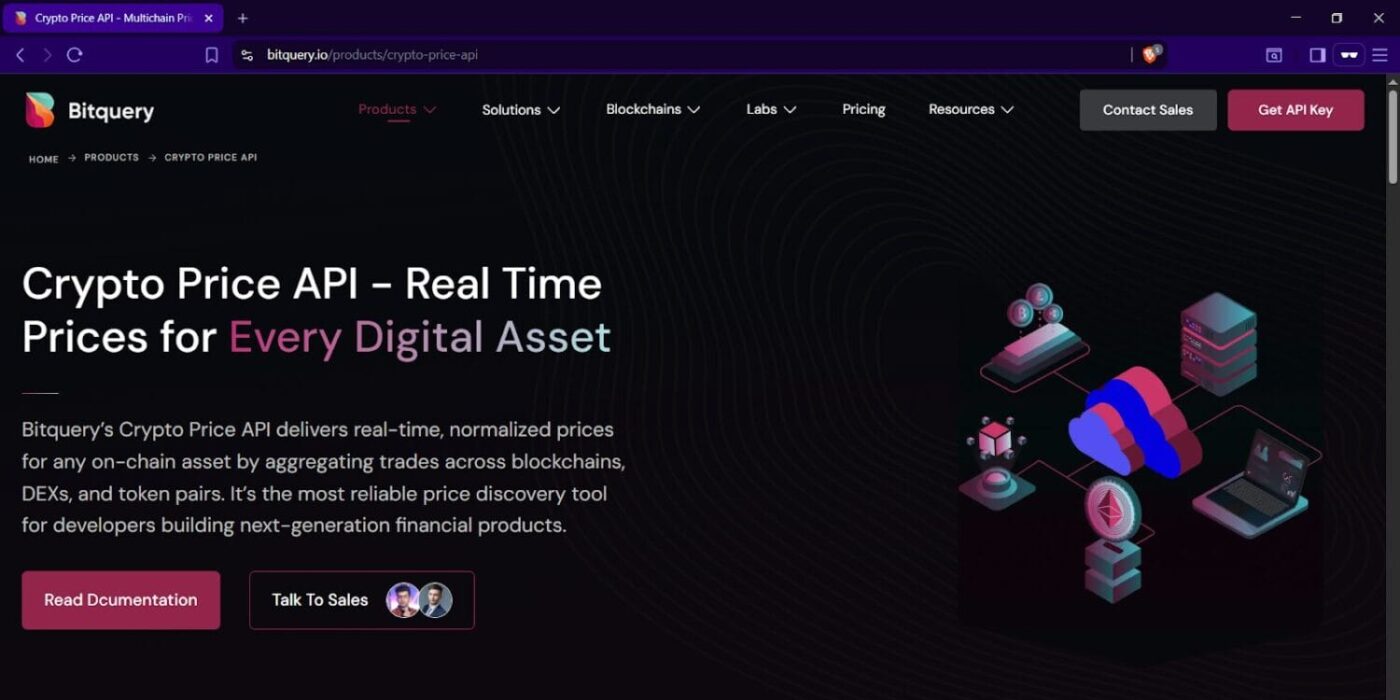
Bitquery indexes and decodes Robinhood Chain from day one: transactions, token transfers, wallet balances, decoded contract events and traces, tokenized-stock activity (NVDA, AAPL, GOOG holders and USD valuations), DEX trades with OHLCV candles across the chain’s trading venues — including the Flap.sh and Bags.fm launchpads — token supply, and cross-chain bridge flows. Everything is exposed through one GraphQL schema, so the question this article is built around becomes a single query:
{
  EVM(network: robinhood, dataset: realtime) {
    Transactions(
      where: {any: [
        {Transaction: {From: {is: "0xYourAddress"}}},
        {Transaction: {To: {is: "0xYourAddress"}}}
      ]}
      orderBy: {descending: Block_Time}
      limit: {count: 100}
    ) {
      Transaction { Hash From To Value }
      Block { Number Time }
    }
  }
}
That’s the complete set — sent and received in one call, including approvals, failed transactions, and plain contract interactions that a transfers-only endpoint drops. When you do want the value-movement view, the Transfers cube applies the same OR filter to Sender/Receiver and joins each transfer to its transaction hash and USD value:
{
  EVM(network: robinhood, dataset: realtime) {
    Transfers(
      where: {any: [
        {Transfer: {Sender: {is: "0xYourAddress"}}},
        {Transfer: {Receiver: {is: "0xYourAddress"}}}
      ]}
      orderBy: {descending: Block_Time}
      limit: {count: 100}
    ) {
      Transfer {
        Amount
        AmountInUSD
        Sender
        Receiver
        Currency { Name Symbol SmartContract }
      }
      Transaction { Hash }
      Block { Time }
    }
  }
}
Swap query for subscription and the same shape becomes a WebSocket stream with sub-second delivery — no cursor polling. For firehose consumers (the 1M-requests-a-day profile), Bitquery also ships the whole decoded chain as Kafka streams with under-500ms latency and as bulk cloud datasets for genesis backfills, which replaces the request loop entirely: one consumer, every transfer, no pagination.
The trading layer gets the same per-address treatment. The Robinhood Trades API covers every DEX trade on the chain — USD amounts, buy/sell side, market cap and FDV context, whale-trade screens, and OHLCV candles from 1-second to 1-hour resolution — filterable by token, pair, pool, or trader. A wallet’s complete trade history is one filter:
{
  Trading {
    Trades(
      limit: {count: 50}
      orderBy: {descending: Block_Time}
      where: {
        Trader: {Address: {is: "0xYourAddress"}}
        Pair: {Market: {NetworkBid: {is: "bid:robinhood"}}}
      }
    ) {
      Block { Time }
      Trader { Address }
      Amounts { Base Quote }
      AmountsInUsd { Base }
      Pair {
        Token { Name Symbol Address }
        QuoteToken { Name Symbol Address }
      }
      Side
      Supply { MarketCap FullyDilutedValuationUsd }
      TransactionHeader { Hash }
    }
  }
}
This too runs as a live subscription for streaming fills. The Trading APIs serve real-time data plus roughly the last 30 days; older trade history comes from the chain-level DEXTrades / DEXTradeByTokens APIs on the same schema.
You can inspect the data quality before signing up: DEXrabbit’s Robinhood dashboard runs entirely on these APIs, tracking 11 DEX protocols on the chain in real time — at publication it showed ~2.7 million trades and 159K active traders over 24 hours, with the NVDA Robinhood token trading across 46 pairs. Every table has a “Get API” button that hands you the exact GraphQL query behind it.
Self-service pricing starts at $39/month (Personal, API-only), $79/month (Pro, adds streaming) and $239/month (Scale, full stream access), with a free 7-day Pro-level trial; Kafka and bulk datasets are on custom Enterprise plans. The honest trade-offs: Bitquery is a read layer, so you still need one of the RPC providers below to broadcast transactions, and if your team has never touched GraphQL there’s a short learning curve — mitigated by the fact that every DEXrabbit chart doubles as a copy-paste example.
2. Alchemy — the official RPC
Alchemy is Robinhood Chain’s officially recommended RPC provider, with dedicated mainnet and testnet endpoints (robinhood-mainnet.g.alchemy.com) over HTTPS and WebSocket. Beyond raw JSON-RPC it brings most of its stack to the chain: the Token, Transfers, and NFT data APIs, webhooks for on-chain event notifications, the Debug API for tracing, and account-abstraction infrastructure (Bundler API plus Gas Manager) for sponsoring gas — relevant on a chain courting users who have never held ETH. It should be your default for writes, confirmations, and event webhooks; for exhaustive address history, the four gaps above still apply, and DIY-ing traces through the Debug API at 864K blocks/day is a project, not a workaround.
3. Blockscout Explorer API — free, and good enough at small scale
The official explorer (robinhoodchain.blockscout.com) runs on Blockscout, which means its API is free and — credit where due — it can list transactions per address: the Etherscan-style ?module=account&action=txlist endpoint and the REST /api/v2/addresses/{address}/transactions route both work. For a hackathon project, a support tool, or spot-verifying your indexer’s counts, start here. What it isn’t built for is production read traffic: rate limits are sized for humans, deep pagination gets slow, and there’s no SLA. It’s also where you’ll verify contract source code.
4. Chainlink — oracles and cross-chain messaging
Robinhood Chain picked Chainlink as its official oracle at mainnet launch. Its price feeds back the on-chain USD valuations of tokenized stocks — the reference prices everything else marks against — and CCIP handles cross-chain messaging for bridging assets in and out. Chainlink solves a different layer than everything else here: it puts data onto the chain rather than reading data off it, so you’ll use it from your contracts, not your backend.
5. QuickNode — the RPC alternative with streams
QuickNode has a dedicated Robinhood Chain offering covering both mainnet and testnet, with its own endpoint format ({ENDPOINT}.robinhood-mainnet.quiknode.pro) and a 99.99% uptime SLA. Its differentiator is the Streams/webhooks product — push-based delivery of blocks, receipts, and logs with historical backfills — which is a sane middle ground if you want to build your own address index without running the block-scanning loop yourself. It also publishes a developer guide to reading tokenized-stock data on-chain. Multi-provider redundancy (Alchemy + QuickNode behind a failover) is standard practice for anything brokerage-adjacent.
6. dRPC — decentralized RPC routing
dRPC runs a Robinhood Chain testnet endpoint (robinhood-testnet.dRPC.org) as part of its decentralized, multi-provider RPC network — requests route across independent node operators rather than one company’s fleet. Independent benchmarking on CompareNodes showed it trailing Robinhood’s own testnet endpoint on p95 latency, though block availability was consistent. Worth a slot in a failover rotation; not the primary for latency-sensitive reads yet.
7. Blockdaemon — institutional node access
Blockdaemon offers institutional RPC and dedicated node access to Robinhood Chain, aimed squarely at the financial institutions the chain’s regulated tokenized-securities use case attracts: dashboard-managed dedicated nodes, token-based authentication, and the vendor-compliance posture (audits, support contracts) that bank procurement teams ask about before your engineers do. If your counterparties require dedicated infrastructure rather than shared endpoints, this is that lane.
8. Validation Cloud — the performance claim
Validation Cloud runs Robinhood Chain nodes it claims rank #1 globally for API response speed on CompareNodes benchmarks, with a 99.99% uptime SLA and SOC 2 Type II compliance. Pricing is friendly for testing: a free tier up to 50 million compute units per month, then pay-as-you-go, then custom private plans. As with any vendor-cited benchmark, run your own from your actual deployment region before believing the ranking — but a generous free tier plus SOC 2 makes it an easy candidate to trial.
The 8 APIs at a glance
| API | Role | Complete per-address history? | Entry price |
|---|---|---|---|
| Bitquery | Indexer: GraphQL, WebSocket, Kafka | Yes — transactions, transfers, traces, one query | $39/mo (7-day free trial) |
| Alchemy | Official RPC + data APIs | Partial — transfers only, no internal category | Free tier |
| Blockscout | Explorer API | Yes at small scale — rate-limited, no SLA | Free |
| Chainlink | Oracles + CCIP | No (on-chain data layer) | On-chain |
| QuickNode | RPC + streams/backfills | Build-your-own via Streams | Free tier |
| dRPC | Decentralized RPC | No | Free tier |
| Blockdaemon | Institutional dedicated nodes | No | Custom |
| Validation Cloud | High-performance RPC | No | Free 50M CU/mo |
A reference architecture that scales past a million requests a day
The teams getting this right on Robinhood Chain converge on the same split:
- Writes and confirmations go through an RPC provider — Alchemy as primary, QuickNode or Validation Cloud as failover.
- History and holdings reads go to the indexer — the two Bitquery queries above replace the sent/received
getAssetTransfersscan pair, with dedup already done and USD values attached. - The head of the chain is a stream, not a poll — GraphQL subscriptions for a handful of addresses, Kafka for the whole chain. This is the change that retires the ~3.6 billion CU/month polling loop outlined above.
- USD marks come from Chainlink feeds on-chain, or the
AmountInUSDfields off-chain. - Verification runs against Blockscout — spot-check your per-address counts against the explorer’s
txlistduring migration, then keep a nightly sample check.
If you’re migrating off an alchemy_getAssetTransfers loop, the mapping is mechanical: erc20/erc721/erc1155 categories become the Transfers cube filtered by Currency, external becomes the Transactions cube, and the internal category you couldn’t get on this chain anyway becomes trace-level data the indexer already decodes. Dedup on Transaction.Hash and diff the counts for a few busy addresses before cutting over.
FAQ
How do I get all transaction hashes for an address on Robinhood Chain?
At small scale, the free Blockscout explorer API (?module=account&action=txlist) will list them. At production scale, query an indexer: Bitquery’s Transactions API with an any (OR) filter on From/To returns the complete set — including approvals, failed transactions, and contract calls that transfer-based endpoints miss — in a single paginated query, with a subscription version for new activity.
Does alchemy_getAssetTransfers work on Robinhood Chain?
Yes — Alchemy’s Transfers API is live on Robinhood Chain. But it returns transfers, not transactions (approvals and no-value contract calls don’t appear), the internal category is only supported on Ethereum and Polygon mainnet, and sent/received require two separate paginated scans. Treat it as an activity feed, not a complete history.
What are Robinhood Chain’s chain ID and block time?
Mainnet is chain ID 4663, testnet is 46630. Blocks arrive roughly every 100 milliseconds (the explorer reports a ~101ms average), gas is paid in ETH, and the chain is an Arbitrum Orbit L2 settling on Ethereum.
Is there a free Robinhood Chain API?
Several: Blockscout’s explorer API is fully free; Alchemy, QuickNode, and Validation Cloud (50M compute units/month) all have free RPC tiers; Bitquery offers a 7-day Pro-level trial for the indexer layer.
Can I stream Robinhood Chain data in real time?
Yes, three ways depending on scale: Alchemy/QuickNode webhooks for event notifications, Bitquery GraphQL subscriptions over WebSocket for sub-second decoded data on specific addresses or tokens, and Bitquery Kafka streams (
Building around tokenized equities more broadly? See our review of Arcus, the 24/7 stock-token and perps DEX from the dYdX team, for how trading venues are forming around this asset class.