

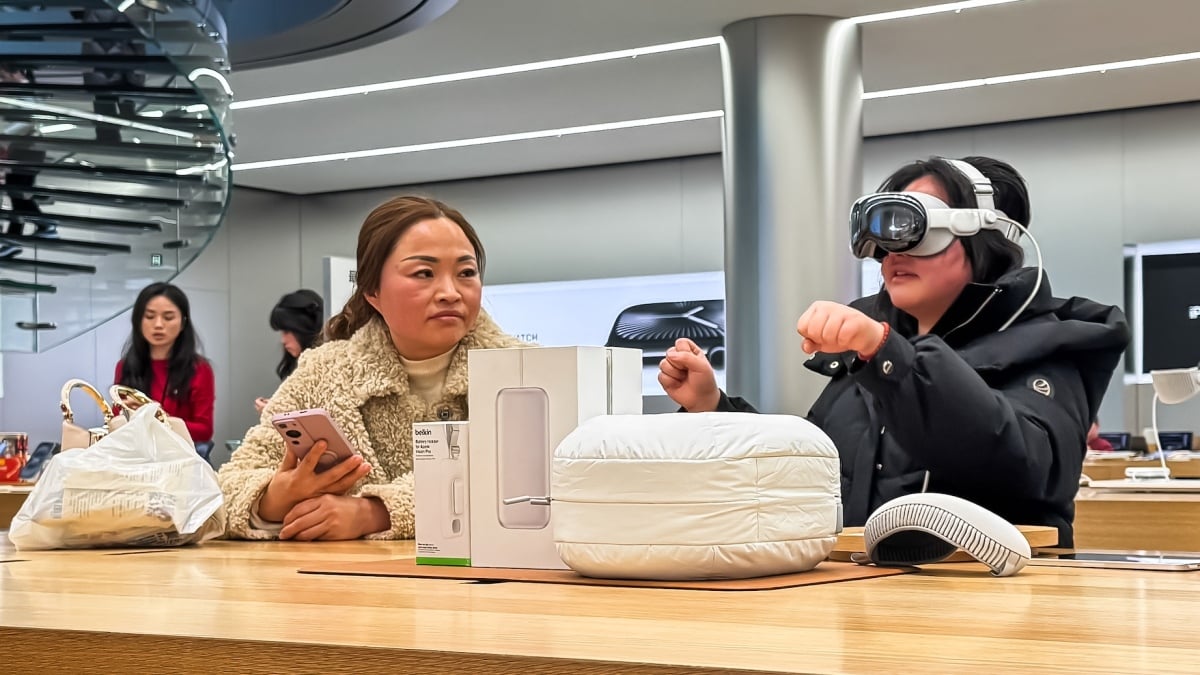
The new year has barely begun, and already we have a strong contender for our annual dead tech list, 2026 edition — the Apple Vision Pro.
Not that the iPhone maker’s Augmented Reality (AR) headset has passed on yet, exactly. The Apple Vision Pro (starting at $3,499) has been, to paraphrase Monty Python, just resting production at its Chinese manufacturer, Luxcorp. That’s according to analysts at International Data Corp, which estimates Apple only sold 4,500 headsets worldwide in the holiday quarter of 2025 — new M5 chip version (which is reportedly made in Vietnam) included.
For comparison, that’s less than one-tenth of the half-million Vision Pros analysts say were sold in its launch year, 2024.
Apple doesn’t break out Vision Pro sales figures — but the company has all but given up on marketing the product, according to a scathing Financial Times report. Digital marketing for the device has been slashed by 95 percent. If you see a banner ad for a Vision Pro in the wilds of the internet, you might want to take a screenshot: You’re looking at an increasingly endangered beast.
What went wrong with the Apple Vision Pro?
To be fair to Apple, slumping sales are a problem across the whole AR/virtual reality space — not to mention the whole U.S. retail space.
Mashable Light Speed
Analysts at Counterpoint saw a 14 percent drop in all AR/VR headset sales in the first half of 2025. The Vision Pro is clearly on the luxury end of the market — Meta’s Quest 3S VR headset recently dropped its price to $250 — and luxury items tend to be the first to go when consumers are feeling the pinch of rising prices on necessities such as groceries and healthcare premiums.
Even if you’re all-in on the idea of hefty AR headsets with battery packs attached, you might be sorely tempted to drop half the price tag of the Vision Pro on the new Galaxy XR headset ($1,800). As cool as the Vision Pro hands-on experience may be, no must-have “killer app” has yet been identified for the platform. The iPhone is an essential status symbol; the iPad helps you live your best creative life; your Mac is your workhorse; and the VisionPro … does what, exactly?
From the outset, the company has struggled to explain why we should want a Vision Pro (as this weirdly Black Mirror-esque product demo showed). So it makes sense to pause those ad dollars, at least. For those of us who find the Vision Pro’s EyeSight display eyes creepy, banner ads that display the feature may make us less likely to buy one.
Apple’s AI glasses are the future.
Disappointing sales and paused production don’t mean Apple has no clue what to do in this category. Quite the opposite, according to one well-sourced Oct. 2025 report — the company is already pulling employees away from its cheaper Vision Pro version, and on to a lighter, cheaper model of smart glasses that will compete with Meta’s AI-powered Ray-Ban Display and Google’s upcoming Android XR glasses.
That makes much more sense. Despite an extremely cringe Mark Zuckerberg demo fail, the $800 Meta Ray-Bans made for one of the more buzzworthy product launches of 2025. Early adopters and critics alike were positive, and investors clamored to buy shares in the company that makes Ray-Bans.
With live translation, directions, and voice search, the Meta Ray-Bans fulfilled many promises of augmented reality that have been with us all the way back to Google Glass (which also took a long time to officially die out); they also happen to be Ray-Bans and thus don’t make you look like a nerd. (Well, unless you’re indoors and the cool shades lighten to reveal, unfortunately, thick frames.)
If there’s any company that understands the importance of design that appeals to non-nerdy customers, it’s Apple. So while the bulky, costly, nerdy Vision Pro may be dead tech walking, don’t count its maker out yet. Apple just may rebound from this sales slump to surprise us with something like a Vision Air — lightweight specs that work for way more than 45,000 new customers per quarter.
Topics
Apple
Augmented Reality