
“Concentrated power is not rendered harmless by the good intentions of those who create it.” – Milton Friedman
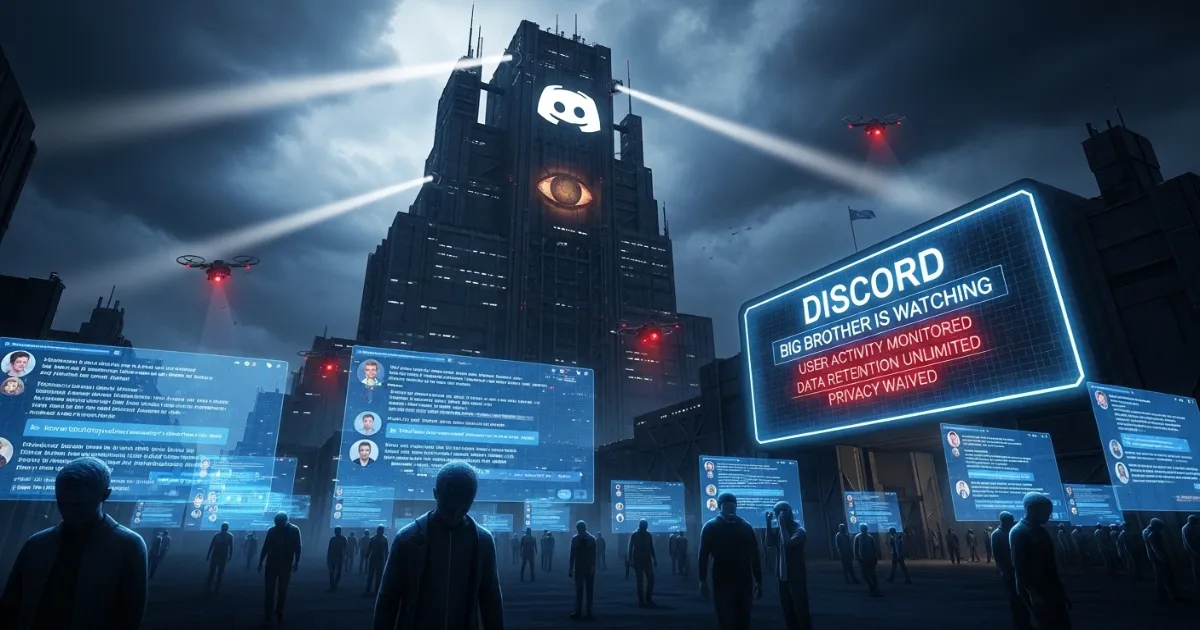
Discord’s move to require age verification through facial recognition and ID scans arrives wrapped in the language of protection. But it’s actually a blueprint for something more troubling: normalizing surveillance in the name of safety.
There’s no real way to know how many Bitcoin-focused Discord groups there are, but there’s no doubt that Discord is an often-reached-for tool in our ecosystem’s toolbox.
The rationales presented by Discord are, by now, familiar. But while KYC (Know Your Customer) requirements, as stated, serve noble purposes, they are little more than ratcheting screws in practice. Each requirement normalizes the next. Each new baseline becomes tomorrow’s minimum. The Overton window moves.
Our movement is skeptical of concentrated power no matter its source—particularly the power to know, track, and categorize citizens. This is true whether that power comes from governments, corporations and, more narrowly, online community platforms.
Discord presents its move as inevitable. It’s not. I know that Discord isn’t trying to harm anyone. The company genuinely believes it’s protecting users. But good intentions don’t prevent the drift. They accelerate it. There’s also the risk that the collected data becomes exposed.
Luckily, there are alternatives. As with Linux and even Bitcoin itself, the open-source approach presents the solution. Alternatives that invert the power dynamic—where users control their keys and platforms can’t—are quietly gaining traction.
Open Source Beats a Tightened Fist
Open-source platforms built on federation models—services like Fedi—don’t require identity verification to participate. They’re privacy-by-design, not privacy-theater. They may be slower to scale and lack Discord’s network effects, but they’re also immune to the pressure that turns “safety features” into surveillance infrastructure.
Additionally, Nostr—a censorship-resistant protocol built on cryptographic keys instead of usernames and passwords—represents another alternative. With Nostr, you don’t create an account with a company but, rather, a keypair. That key is yours. No verification. No ID. No biometrics. No company between you and your data.
The protocol is still young. The user experience needs work. But the architecture is sound: you own your identity, not a platform.
This matters more than it sounds. On Discord, your account is Discord’s property. On Nostr, your account is mathematically yours. You can move between relay servers—the infrastructure layer—without losing your identity or your social graph. You can’t be deplatformed because there’s no platform to deplatform you from.
And it’s not just Discord. It’s TikTok facing potential regulation. It’s Instagram adding identity verification for creators. It’s the entire social internet moving inch by inch toward a future where participation requires documentation.
The Moves We’re Making
We’re at an inflection point. Over the next few years, communities like Bitcoin Park‘s 1,000+-person Discord will migrate to alternatives. We’re slowly moving ours across multiple platforms—Fedi for federated communication, Nostr for censorship-resistant social layers.
This is not because our members are doing anything wrong and most certainly not because we have something to hide. We believe people deserve infrastructure that respects privacy and sovereignty as principles.
These tools are unglamorous and slower to adopt, but they’re getting better. And they’re the only infrastructure that genuinely inverts the power dynamic—putting users in control rather than platforms.
So we’re choosing tools that can’t be turned off. Not because we’re paranoid but because, on behalf of the communities we serve, we’re paying attention.
Consider subscribing: bitcoinpark.com/email
This is a guest post by Rod. Opinions expressed are entirely their own and do not necessarily reflect those of BTC Inc or Bitcoin Magazine.