
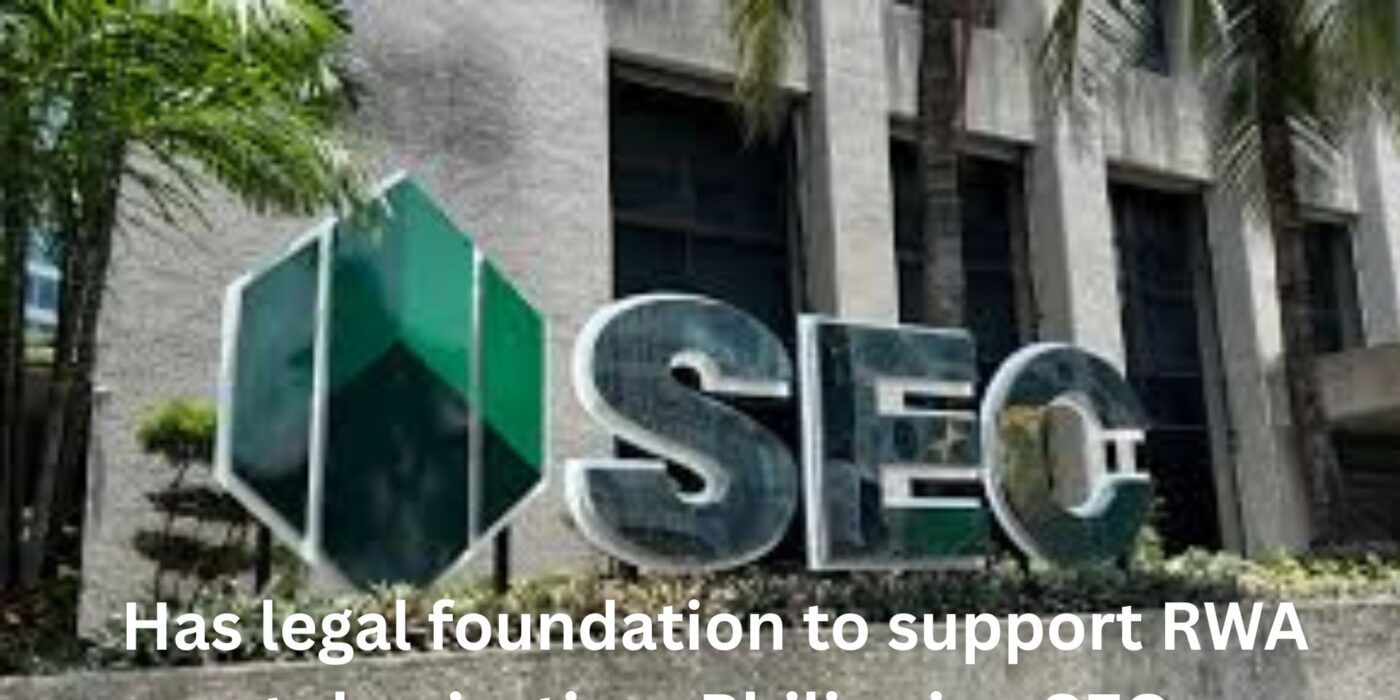
In a major development, the Philippine Securities and Exchange Commission(SEC) has signaled it is ready to support the tokenisation of real-world assets, telling industry attendees that existing law already gives regulators the framework needed to oversee such offerings.
Speaking at Philippine Blockchain Week 2026, SEC Commissioner Rogelio Quevedo said the agency now believes it has what it needs to move forward on tokenized assets. “We are now fully convinced that we have the proper law, the proper regulatory mind and background to support tokenization,” he said, according to remarks reported on June 20.
As per CoinTelegraph, Quevedo framed tokenization as more than a niche financial product, suggesting it could reshape how the country’s capital markets function. He said the technology has the potential to modernize investment access and could eventually “revolutionize” how stock exchanges operate.
A central part of his remarks focused on the country’s overseas Filipino workers, a group that sends billions home annually but often lacks reliable channels to invest those earnings. Quevedo argued that tokenized products could give OFWs a regulated, scam-resistant alternative to riskier informal investment options. “Our OFWs, they have the capital. They do not know where to place their money,” he said.
The comments come as many countries continue to debate how tokenized assets should be regulated, while the Philippines has already moved into active testing. Through its Strategic Sandbox program, known as StratBox, the SEC allows fintech firms to launch and trial new products in a controlled environment under direct regulatory supervision.


By November last year, four companies had already entered the sandbox. One was testing a tokenised real estate product, two others were focused on providing access to US equities, and a fourth received approval to test crypto-related services.