

Pi Network has started its second migration phase with the required Protocol 21 upgrade. The update sets an April 6 deadline for mainnet node operators and opens the path toward later upgrades that aim to add smart contracts and DeFi tools.
Summary
- Pi Network requires mainnet nodes to upgrade to Protocol 21.2 before the April 6 deadline.
- The roadmap schedules Protocol 22.1 for April and smart contract features for the May rollout.
- Pi traded near $0.174 as RSI and MACD signaled weak momentum and sellers still controlled.
The move also comes as Pi’s token trades near $0.174, far below its all-time high. At the same time, chart indicators show weak momentum as the market waits for the next stage of network changes.
Pi Network has moved from Protocol 20.2 to version 21.2 as part of its second migration phase. The Pi Core Team said all mainnet node operators must complete the upgrade before April 6 to remain connected to the network.
The update focuses on network stability and better node efficiency. It aims to help the system handle heavier traffic while keeping nodes synchronized across the mainnet.
The team warned that nodes that miss the April 6 deadline may lose network connection. That notice places direct pressure on node operators to update their software on time and avoid disruption.
Pi Network framed Protocol 21 as a base layer for future features rather than a full feature release. While new tools will arrive in stages, the current step prepares the network for broader functionality in later protocol versions.
According to the roadmap shared by the Pi team, Protocol 22.1 is scheduled for April 22. Protocol 23.0 is expected to follow on May 18 as the network moves toward smart contract support.
The roadmap also lists features tied to that transition, including a Pi DEX, on-chain liquidity tools, and broader support for decentralized applications. The stated goal is to improve transaction flow and expand network use cases for its user base.
Pi price holds weak tone as traders track indicators
Pi coin traded around $0.174 at the time of reporting, about 78% below its all-time high. That price level reflects a market that remains cautious even as the network moves ahead with technical upgrades.
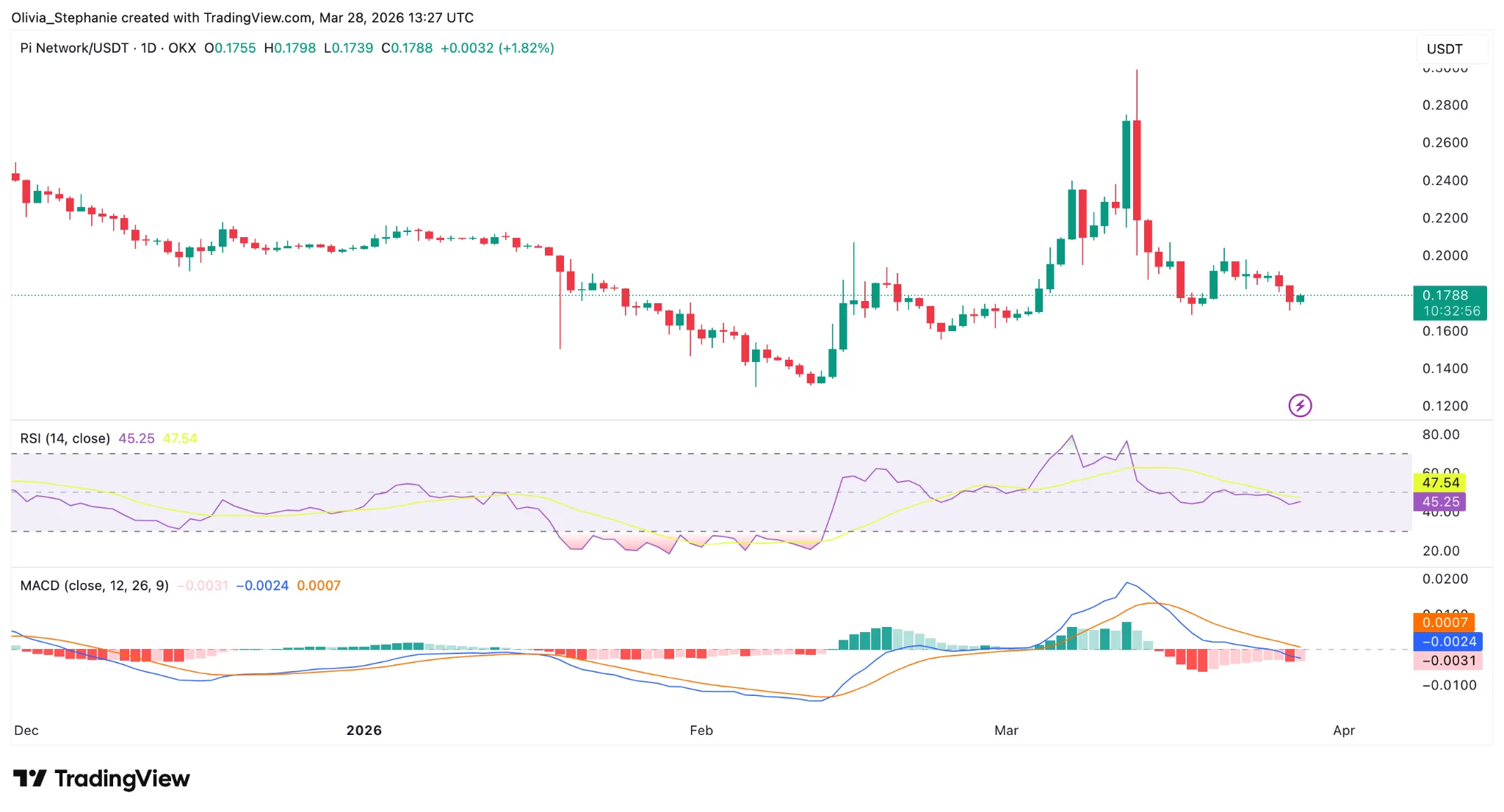
Daily chart indicators showed a soft bearish setup. The RSI stood at 45.29, below both the neutral 50 mark and its moving average of 47.54, which pointed to weak momentum without oversold conditions.
The MACD line remained below the signal line, while the negative histogram showed that sellers still held control, though downside pressure had started to ease.