
Meta’s $17 billion settlement is a fence around a mile-deep hole at a playground. Fewer kids fall in on the way to the swings, but the hole is still there.
Full wins are rare in the fight for online child safety. What families mostly get are half-wins like a settlement instead of a verdict, a design mandate not turned on by default, or a check that is a rounding error relative to a company’s annual revenue. Half-wins are still worth having. But they carry a cost that clean victories don’t: because a half-win is contestable, advocates don’t get to just win it. They have to keep re-arguing that it counts, in public, indefinitely, using the same personal cost that got them into the fight in the first place.
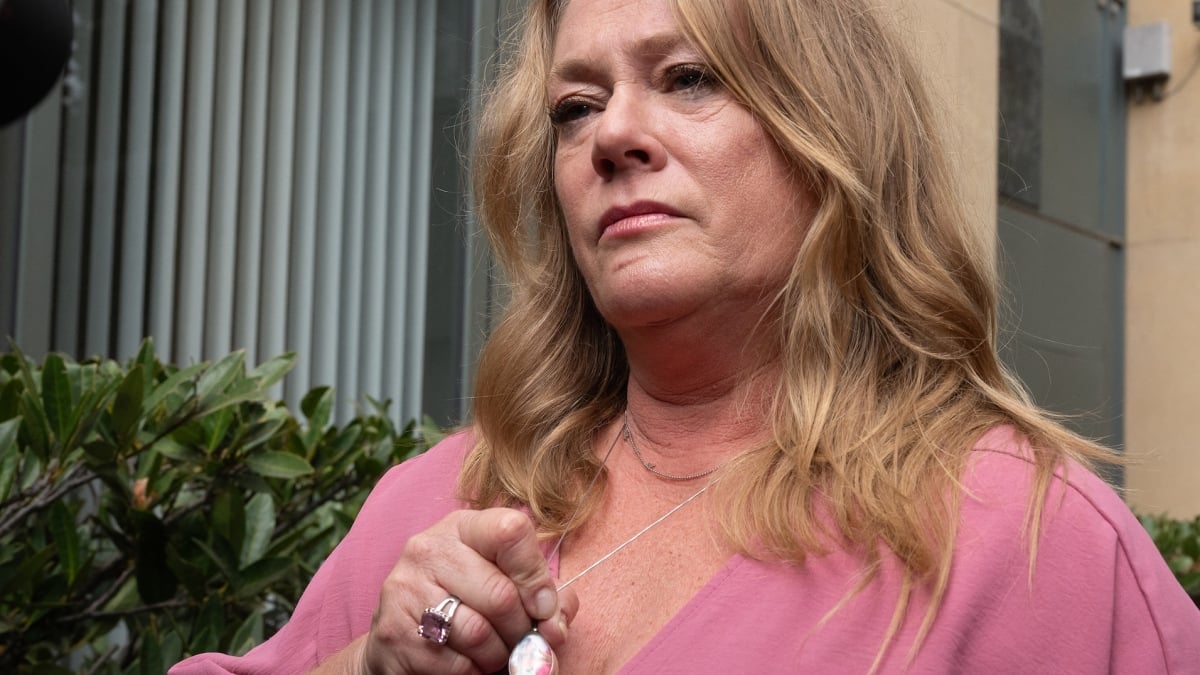
I watched that cost get paid in real-time outside the federal courthouse in Oakland when survivor parents — Lori Schott, Shannon Heacock, Erin Popolo, Julianna Arnold, Mary Rodee, Victoria Hinks, Paul Hinks — stood in front of a wall of cameras and talked about the worst moment of their lives, again, for an audience that will mostly remember a 10-second clip and a dollar figure. Joining them were young people who didn’t have to be there, standing beside them in solidarity.
None of that shows up in a settlement figure. It’s not a line item. It’s not even really visible in most coverage of the case, because the story is “Meta settles,” not “here is what it takes to make Meta settle.”
I grew up in front of cameras, and I know the instinct they train into you: get small, get careful, hand over the version of yourself that’s easiest to broadcast. What that experience taught me is that visibility is not a neutral cost. Every time a parent goes back on camera to describe how their kid died, or a young survivor stands in a plaza holding a photo instead of being anywhere else, they’re paying something the settlement itself will never account for.
Meta’s $17 billion figure has line items for age-assurance systems and independent auditors. It has no line item for what it costs a parent to relive their child’s death on a stranger’s studio couch, but they do it anyway because that’s what it takes to get airtime.
It’s why these types of wins are exhausting. A settlement requires the people who fought for it to keep proving, publicly, that it was worth fighting for. If we’re serious about accountability, the fix isn’t asking survivor parents to keep showing up to press conferences until Meta gets embarrassed enough to throw better-looking Band-Aids at the problem. It’s changing the business model in the first place to ensure these companies are required to fix what took these kids too soon: a business structure that relies on addictive features.
Mashable Light Speed
In California, AB 1709, authored by Assemblymember Josh Lowenthal and signed into law by Governor Gavin Newsom on Sept. 10, does that by making these companies stop deploying addictive features to users under 16. Not a content ban, but a design restriction. A platform can keep operating exactly as it does now for everyone else, but it doesn’t get to hand a 12-year-old the same engagement-optimized product it hands an adult.
AB 2, also authored by Lowenthal, makes large platforms liable for real money — up to $1 million per child, or three times actual damages — when ordinary negligence in the design of the product injures a minor. That’s not a number Meta can negotiate down to a lump sum once and move on from, the way it did with this settlement. It scales with every child harmed, case by case, indefinitely — which is exactly the kind of exposure a company can’t absorb as a cost of doing business, because there’s no ceiling on it to absorb.
Together, these bills do what a $17 billion settlement can’t: they change the incentive before the harm happens, instead of paying for it after the fact.
That’s the difference between managing a story and fixing a product. A settlement is Meta agreeing, after years of litigation, to adjust some defaults under supervision it can eventually age out of — a 10-year consent decree that ends, after which Meta negotiates the next one from scratch. AB 1709 doesn’t ask Meta to behave better under supervision that expires. It removes the option to keep operating the way it currently does and call it compliance, permanently, the same way any other law stays on the books after the fight to pass it is over. The parents testifying in Sacramento are doing the same kind of labor they did outside that courthouse, but they’re doing it once, for a law that outlives the news cycle, instead of doing it every time a consent decree comes up for renewal.
While those parents were in Sacramento testifying about their kids, Meta’s lobbyists were in a different room asking for a way out. Politico reported that Meta approached Senate Judiciary Chair Tom Umberg with draft language that would let platforms apply for an exemption from AB 2 entirely. Meta spent $4.6 million lobbying Sacramento last year, more than any year since it started lobbying the state in 2010, and launched a new political committee to back candidates who favor lighter tech regulation. So the next time you see Meta’s PR machine discussing how much they want to show up for parents, remember: they spent a lot trying to shut those same parents up in state legislatures.
The fence is up. The hole is still there. And the people who keep pointing at the hole, publicly, at their own expense, deserve better than another way for Meta to fool the masses while it keeps deploying the same business model that brought these parents to their child’s gravesite instead of their high school graduation.
This article represents the opinions of its author.
Lennon Torres is a former Dance Moms performer now fighting for young people’s safety online. A trans activist and University of Southern California alum, she uses her pop‑culture fluency and lived experience to power her work at the Heat Initiative, taking on tech giants and demanding platforms to protect and empower the next generation.