Key Takeaways
- Ireland’s CAB recovered 500 more BTC on July 2, 2026, pushing its 2026 total to 1,500 BTC.
- Europol supplied technical support that let CAB crack a third of Clifton Collins’ 12 wallets.
- About 4,500 BTC, worth roughly $275 million, remains locked in nine unaccessed wallets.
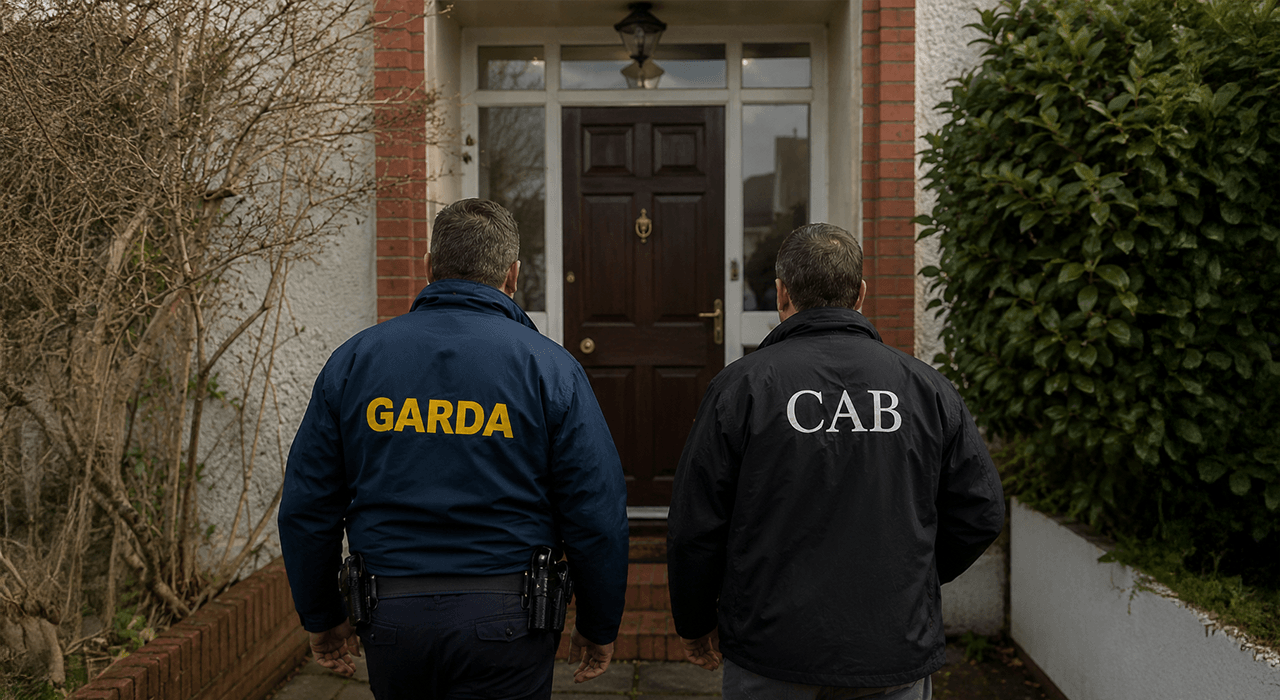
The bureau, working with Europol’s European Cybercrime Centre, has now accessed three of 12 wallets tied to Clifton Collins, a Dublin man convicted in 2017 for running an indoor cannabis operation across three counties. Each wallet held roughly 500 BTC. Bitcoin.com News reported on the very first CAB breakthrough and further noted that the funds were sent to Coinbase.
CAB Cracks a Third Wallet
The latest breach happened around July 2, with bitcoin trading near $61,749. That put the newest tranche at about $30.9 million. Combined with recoveries in March and May, also roughly 500 BTC each, the running total from the case now sits at 1,500 BTC.
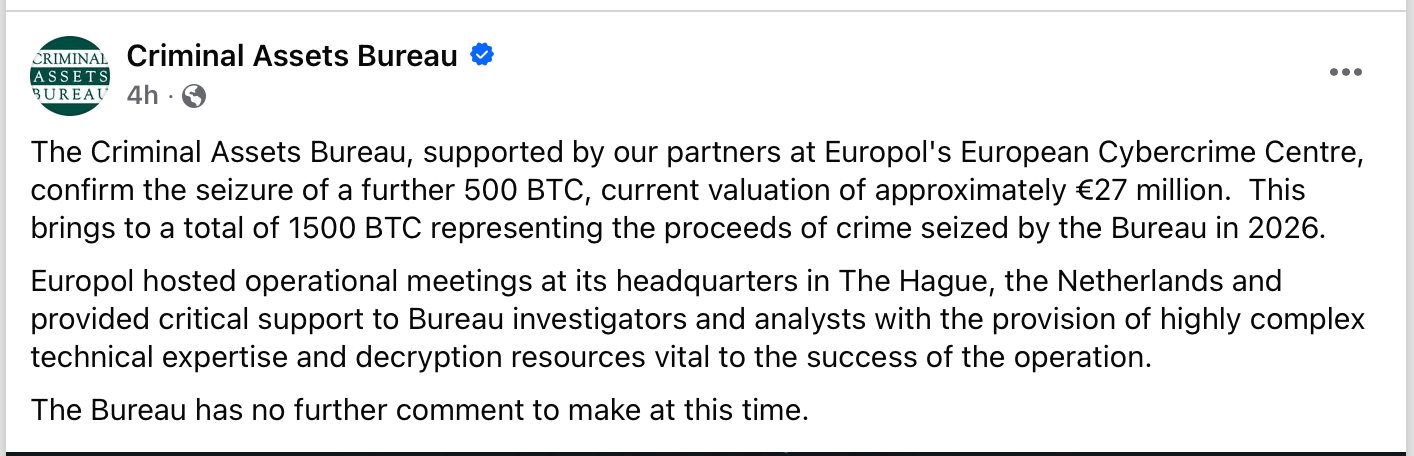
CAB has not disclosed the technical method behind the wallet access, standard practice during an active case. Officials credit Europol with hosting meetings in The Hague and supplying the decryption resources that made the breach possible.
A Beekeeper Turned Grower
According to an in-depth report from the Irish Times published in 2020, Collins worked as a security guard and later as a beekeeper before shifting to cannabis cultivation full-time around 2005. He rented grow sites in Cornamona, Kells, and Drumlish, harvesting roughly every 16 weeks and selling to dealers in Dublin.
A Garda patrol spotted his Lexus parked in the Wicklow Mountains at 2:30 a.m. on February 7, 2017. A search turned up cannabis worth about €2,000. That stop led investigators to his Galway property, where they found more than 500 plants worth roughly €406,000.
A Fishing Rod Case Held the Keys
It was reported that Collins bought about 6,000 BTC in late 2011 and early 2012, when bitcoin traded for a few dollars a coin. He split the holdings across 12 wallets and printed the private keys on paper, which he hid inside the aluminum cap of a fishing rod case at his rental property.
After his arrest, the landlord cleared the property and sent the contents to a landfill. The fishing rod case went with them. Collins told CAB investigators he lost access to the bulk of his bitcoin, and for years, authorities treated most of the stash as unrecoverable.
A High Court order around 2019 confirmed the holdings as proceeds of crime and directed their confiscation, even though CAB could not yet move the coins. Collins had already surrendered smaller amounts of bitcoin with recoverable keys, along with other assets, including a gyroplane, a fishing boat, and a camper van, netting the state about €1.2 million years before the larger wallets became relevant.
During interviews with CAB, Collins reportedly attributed his cannabis operation to what he called “stupidity” and “addiction.” He served part of a five-year sentence under the Misuse of Drugs Act, with a portion of the term suspended.
Wallets Sat Dormant for Nearly a Decade
Onchain records show no activity from the wallets between Collins’ 2017 arrest and the first recovery in March 2026. That gap matters. It supports the account that CAB genuinely lacked access rather than sitting on keys it chose not to use, and it explains why the wallets attracted attention from blockchain researchers well before the state made any breach public.
CAB officials have described the years of holding a confiscation order on an asset they could not touch as its own kind of frustration. Bitcoin’s price kept climbing while the wallets stayed sealed, so the value tied up in the case grew even as the coin count stayed fixed.
4,500 Bitcoin Remain Locked
Nine of the 14 wallets, holding an estimated 4,500 BTC, remain outside CAB’s reach. At current prices, that stash is worth more than $275 million. The bureau still controls the wallets under the existing confiscation order and continues working to access them.
Onchain analytics firm Arkham Intelligence has tracked the cluster under labels referencing Collins and his lost keys, flagging each new movement as it happens. Recovered coins have moved to institutional custody for management ahead of eventual liquidation.
Before this case, CAB had sold roughly €6.5 million worth of cryptocurrency across all prior cases over a decade. The Collins recoveries already dwarf that figure, and a full recovery of the original 6,000 BTC would rank among the largest crypto forfeitures by any law enforcement agency in Ireland.
For traders watching from the sidelines, the case is a reminder that coins written off as permanently lost can still surface years later, particularly when a government agency has the wallet under legal control and the resources to keep trying.